I'm a retired educator (teacher/principal) who moved from Northern California to Payson, Arizona in September, 2010.
This blog will chronicle my adventures as I explore a different ecosystem and build my new home.

Sunday, March 3, 2013

Photography Class Saguaro Shoot


Our photography class drove about 50 minutes south of Payson to the Sonoran Desert/Four Peaks area to photograph cactus.


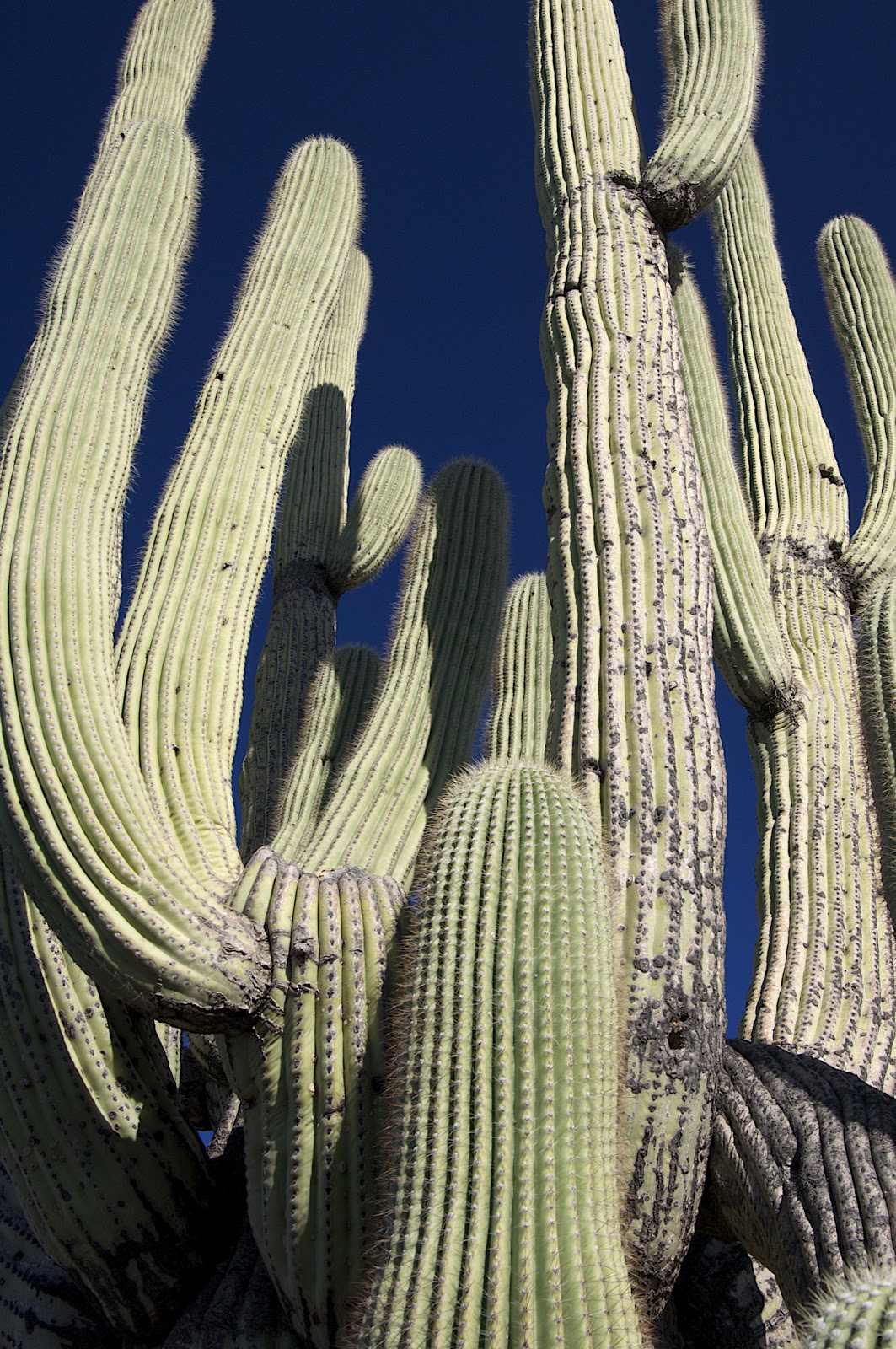
Saguaros are the largest cactus in the U.S. They are pretty amazing in that they live for 150-200 years.
In their first year they grow only about 1/2 "......we have some in our greenhouse. They reach about a foot in 15 years. Ten feet in 40-50 years and 12-20 feet in 75-100 years when the arm buds usually appear.


The desert was a comfortable 68 degrees and it was green due to recent precipitation....even some snow.


This is a Cholla (CHOY-uh) plant. Native Americans eat the flower buds after steaming them. There is a class at the Desert Botanical Gardens on harvesting and cooking Cholla buds...the ultimate experience in eating local!
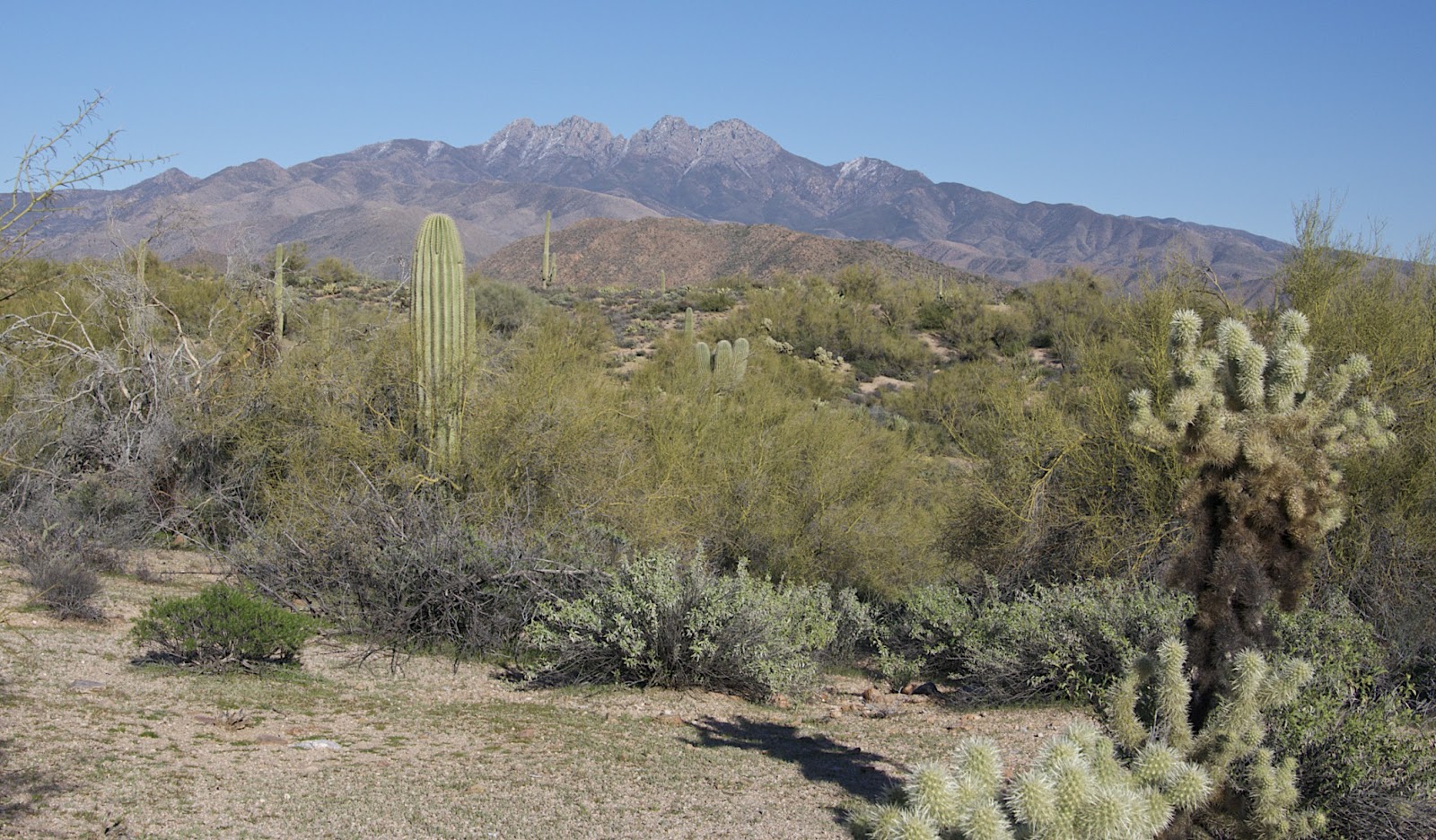

Young saguaros cannot survive either the heat of the desert sun or trampling. They usually grow under a "nurse" plant, such as a creosote bush or a paloverde tree. Spines on the stems of the older plants provide shade to the trunk.


After a rain, the accordion-like pleats of a saguaro expand as it draws up water with its shallow roots, which often sprawl over a 50 foot radius. A mature plant may soak up to 200 gallons of water during a rainstorm. During droughts the saguaro becomes slim again.


Once saguaros reach a height of about 8 feet, the first flower buds appear. Flowers smell like ripe melon, and attract bees and other insects during the daytime, and bats and moths at night. Full-grown saguaros produce at least 100 fruits in a season. In July, when mature, the fruits split open, revealing their scarlet linings, deep red pulp, and up to 2,000 tiny, jet-black seeds.


Pulp and seeds provide food for birds, small rodents, harvester ants, and other insects. Fruit and seeds are used by Native Americans for food. The wooden ribs of dead plants are used for shelters, knick-knacks, hiking sticks, and corrals. Woodpeckers drill holes in saguaros for nest sites, where in summer the inside temperature is 30 degrees lower than the outside air. The injured saguaro lines the woodpecker hole with scar tissue, producing a boot-shaped structure. These "boots" are used by nesting elf owls and other birds.

Lower Salt River Float


We signed up with the Desert Botanical Gardens for a sunrise float down the Lower Salt River. We left Payson at 5:00 am and got in the water at 6:30 am. It was COLD!


We had two rafts and two guides who knew a lot about the area. This is a great spot for tubing, biking and hiking. The lower stretch of the Salt River, though controlled by dams, flows perennially and is highly scenic in its setting among Arizona Upland Sonoran Desert vegetation.


My only problem was that I wore water sandals (no socks) and my feet were like popsicles. I assumed the sun would come out and warm us up.....it came out but it was not warm.


We saw juvenile Bald Eagles.....at least 4 but maybe 6. It was difficult to know if we were counting the same ones twice!


We also saw wild horses, heron, egret, waterfowl, and other riparian and upland birds. Migratory song birds are starting to appear. We noticed a beaver dam and we spotted the eagles' nest in one of the old Cottonwood trees.


We smelled a skunk but didn't see one. Our guide spent the night there and heard owls all night long. This area also is home to bighorn sheep, deer, javelina, coyotes, foxes and raccoons.


This is Red Mountain.....gorgeous light as the sun rose.


Randy got a photo of one of the eagles. The Tonto National Forest is about the size of Connecticut....a nice size range area for an eagle!

Fishermen were starting to arrive when we got out of the river. The area (Saguaro Lake) gets stocked with walleye, largemouth and yellow base, rainbow and brown trout, bluegills, channel catfish and crappie.

Thursday, February 28, 2013

Cornish Game Hen Cooking Class


Cooking Class was fun this month. Randy got to attend as a guest. I think Jude will be letting more guys come to selected classes. Everyone knows what a terrific cook Randy is! He offered to sharpen some of Jude's knives. She was delighted.
We made Risotto with Peas and Dried Mushrooms. Jude got the mushrooms from Costco...several varieties (chanterelles, porcine, morels). She only uses a homemade broth for her dishes...in this one she used a beef broth. You add balsamic vinegar at the end along with fresh mint and thyme. Very good.


She then made two kinds of roasted Cornish Game Hens. One with a tangerine-herb butter and the other with truffle oil, prosciutto and wild mushrooms. She put the stuffing under the skin of each bird.


Jude brines all of her meat first before cooking....chicken, pork, etc. She uses a half cup of Diamond Crystal salt and 4 cups of water and leaves the meat in the brine for 1 hour. She says you can taste the difference.

Thursday, February 21, 2013

More Snow!


We got about 8 inches of snow.....I have lost track of how many times it has snowed this winter.


The neighborhood looks beautiful. While walking Cooper I noticed how quiet it was. Not many cars on the streets and everyone inside staying warm.


The sun tried to come out yesterday afternoon but didn't make it. It's overcast today and still 34 degrees at noon.


The sun should be out tomorrow.....hope so......our window washer friend, Justin, is coming to wash all of the windows, inside and out! It's hard to decide the best time to wash the windows.

Wednesday, February 13, 2013

Sedona Photos


 I thought I would share some of my photos from our recent trip to Sedona with our photography class.


Obviously our assignment was landscapes.


 We had perfect weather...sunshine and clouds. Clouds make all the difference.


There is just nothing like these red rocks. They always amaze me.


Since these photos were taken we have had many inches of snow....three days worth. The highway was closed on Monday and they also had to close the schools and quite a few businesses. We are not complaining as weather in other areas of the U.S. has been so awful.


Sunday, February 3, 2013

Artisan Bread


We just purchased a NutriMill grain mill. A friend has one and loves it so Randy decided to give it a try knowing that freshly ground flours offer the most nutritional value. It has a 20 cup capacity, has great reviews and grinds fine or coarse flours.


Randy also bought 25 pounds of organic Hard Red Spring Wheat. You might ask why we are going to all of this trouble for bread. Because there is no good (nutritious) bread in Payson!!


The canister on the left has some of the ground flour in it. The other containers have rye and whole wheat sourdough starter in them. Randy has been using the cookbook, Artisan Bread in Five Minutes a Day by Jeff Hertzberg and Zoe Francois for much of his bread baking . His favorite whole wheat recipe is on page 76....100% Whole Wheat Sandwich Bread. He even made English Muffins with this recipe....they are so good!

Saturday, February 2, 2013

Riparian Preserve


Thought I would share some photos from our last photography class field trip.


We drove to Gilbert (Phoenix area...about 95 minutes from Payson) and walked around a number of ponds at the Riparian Preserve at Water Ranch.


An adult pair of Blue Herons and a "baby".


The preserve has 110 acres and is a water reclamation project.


This coot is one of 200 birds that have been sighted at the water ranch.


The preserve has an observatory and a variety of programs for school-age children plus regular family bird walks.


Love the colors on this Northern Pintail. (Click on the photo to enlarge.)